Ask a racer whether indoor or outdoor karting is better and you’ll get opinions. Ask an investor and you’ll get a much harder question — because the indoor vs outdoor karting business decision isn’t about which is more fun. It’s two different business models: different capital, different real estate, different customers, different revenue curves. BMI Leisure was born in karting and powers 300+ tracks of both types worldwide, so we’ve watched this decision play out hundreds of times. Here’s the honest comparison.
Indoor vs Outdoor Karting at a Glance (Quick Verdict)
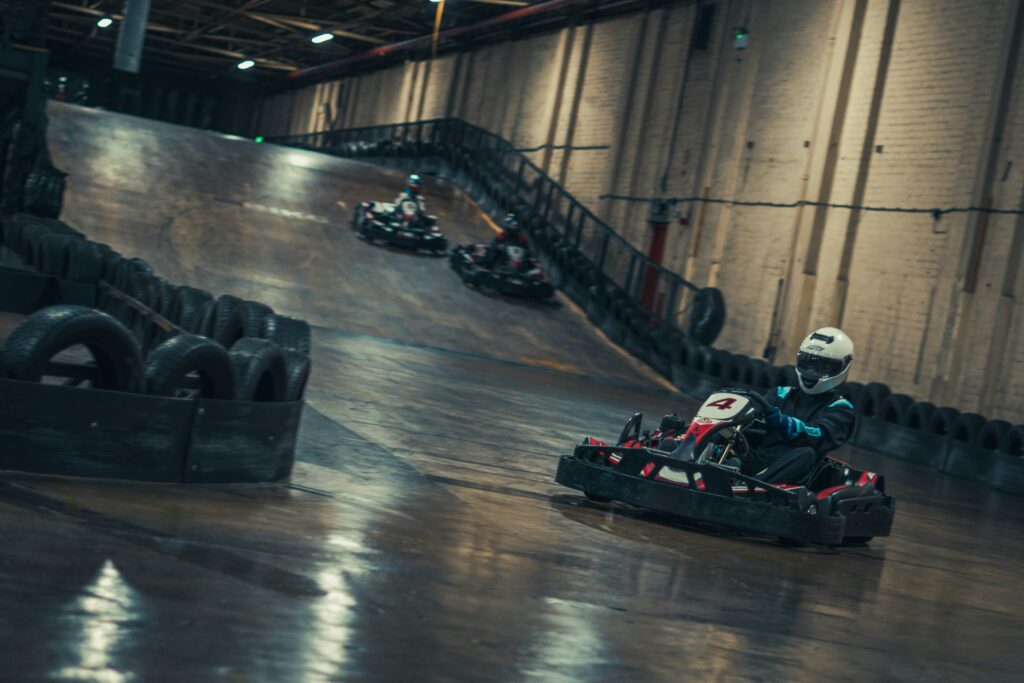
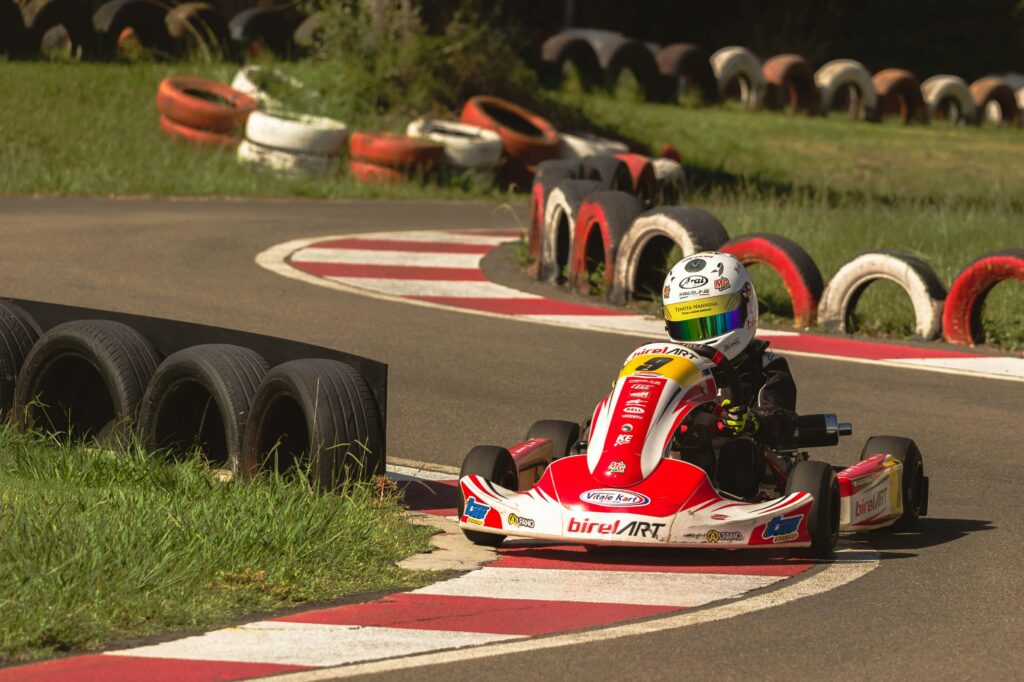
An indoor karting business trades higher urban real estate costs for weather-proof, 365-day revenue from casual racers, parties and corporate events. An outdoor karting business trades seasonality for authentic motorsport speed, bigger events and cheaper land. Indoor typically needs $420K–$1.5M+; outdoor runs $500K–$3M+ with land and paving. Neither wins universally — your market, climate and capital decide.
| Factor | Indoor karting | Outdoor karting |
|---|---|---|
| Typical investment | $420K – $1.5M+ | $500K – $3M+ |
| Real estate | Urban/suburban warehouse, 30,000–60,000 sq ft | 2–5+ acres, usually outside city limits |
| Operating calendar | 365 days, weather-proof | Seasonal; weather-dependent closures |
| Kart fleet | Electric (instant torque, no fumes) | Gas or high-performance electric |
| Track style | Short, technical, precision-focused | Longer, faster, real racing lines |
| Core customers | Casual racers, families, corporate groups, parties | Enthusiasts, leagues, kart owners, events |
| Revenue pattern | Steady volume, strong weekdays possible | High peaks, deep valleys |
| Biggest cost risk | Urban rent and buildout | Land, paving, and lost weather days |
| Maintenance | Lower — controlled surface, electric fleet | Higher — weather wear, faster karts |
| Expansion logic | Repeatable urban format, multi-location friendly | Destination venue, grows by events & leagues |
The Business Case for Indoor Karting
Investment and real estate
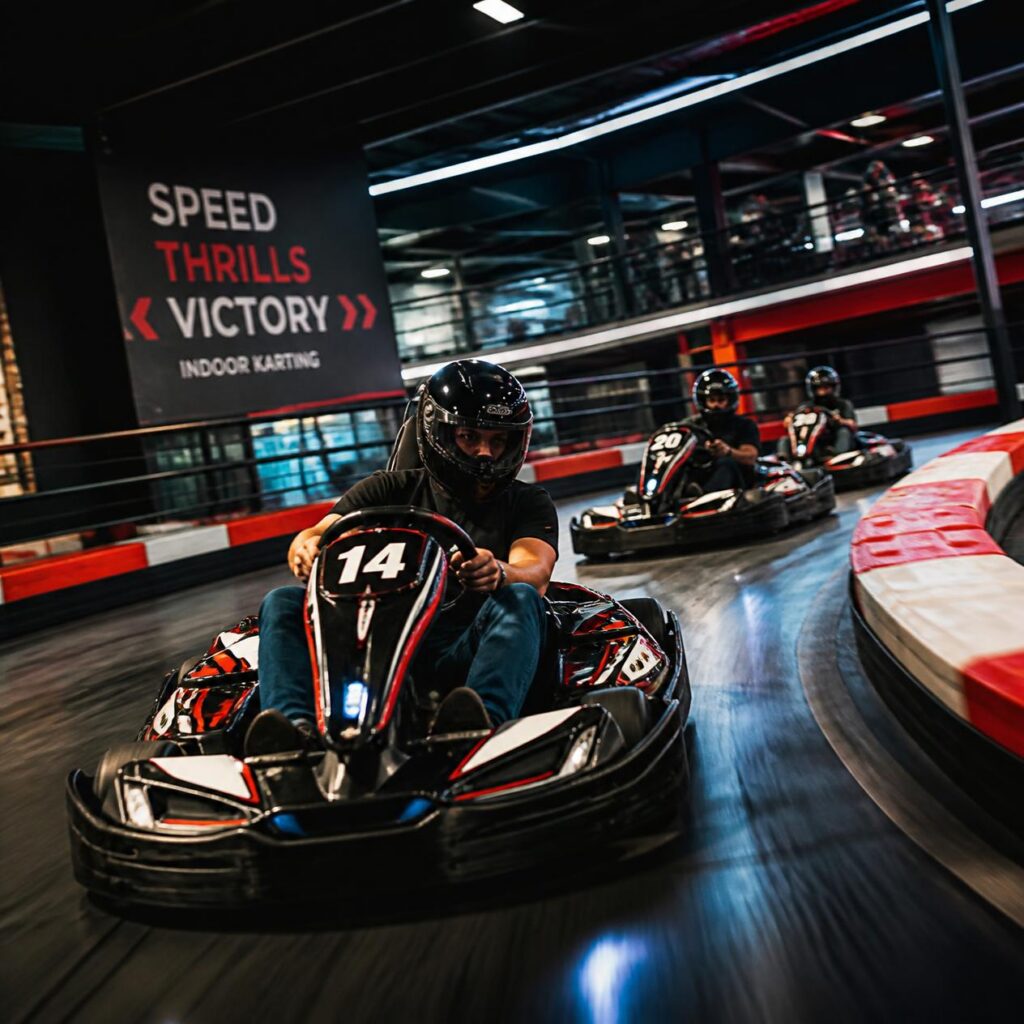
Indoor karting is a real-estate business with karts inside it. You need a warehouse-format space — roughly 30,000–60,000 sq ft with generous ceiling height — in a location families and corporate groups will actually reach. That urban proximity is exactly what makes the rent painful and the customer flow reliable. All-in, commercial indoor facilities typically run $420,000 to $1.5M+, with multi-level track structures adding $375K–$850K in steel alone. (Full line-item breakdowns are in our guide to the cost of building a go-kart track.)
Revenue pattern: 365 days of steady volume
The indoor model’s superpower is the calendar. Rain, snow, heat waves, early sunsets — none of it touches you, and some of it actively fills you (nothing packs an indoor track like a rainy Saturday). Weekdays get rescued by the two customer types outdoor tracks struggle to book: corporate events that arrive on Tuesdays with big invoices, and birthday parties that book weekends solid. The result is the steadiest utilization curve in location-based karting — which is what lenders like about the model too.
Your customers: casual racers, families, and companies
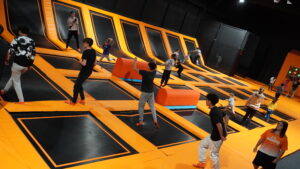
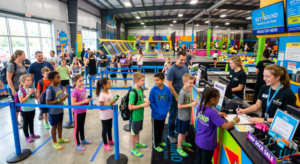
Indoor customers are mostly not “karting people” — they’re people looking for something fun to do. That’s a feature: the casual market is enormously bigger than the enthusiast market, visits in groups, and buys F&B and arcade time around the racing. Your competition isn’t the outdoor track an hour away; it’s the cinema and the trampoline park down the street.
The Business Case for Outdoor Karting
Investment: land, paving, and zoning
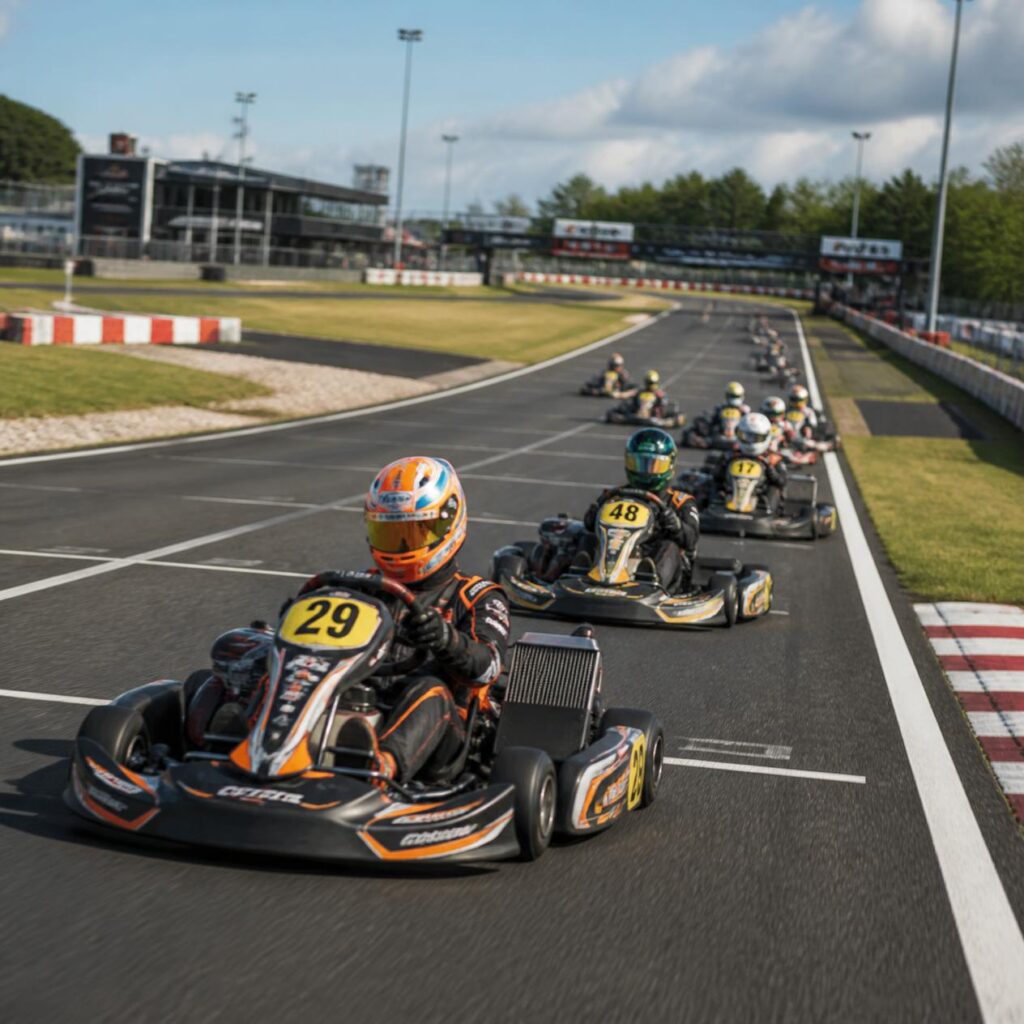
Outdoor karting flips the cost structure: land replaces rent, and asphalt replaces buildout. You’ll need 2–5+ acres — cheap if rural, contested if suburban — plus a paving package that typically runs $140K–$450K for a full circuit, and the patience for motorsport zoning approvals (noise is the fight; electric karts are changing it, more below). Total projects commonly land between $500,000 and $3M+.
Revenue pattern: seasonal peaks (and how to survive the valleys)
Outdoor revenue is a mountain range: glorious weekends, dead winters, and weather risk on every booked event. The operators who thrive plan the season like a campaign — pre-selling memberships and leagues, packing the calendar with events, and using dynamic pricing on peak days. We’ve written the full playbook in our outdoor karting season strategy guide; the short version is that the valleys are survivable if — and only if — you monetize the peaks properly.
Your customers: enthusiasts, leagues, and kart owners
Outdoor tracks attract people who race: club drivers, junior programs, arrive-and-drive leagues, owners who trailer their own karts. Smaller market, far deeper engagement — these customers come weekly, not yearly, and events built around them (endurance races, championships, track days) produce the biggest single-day revenues in karting. The authentic-motorsport experience is a moat no indoor venue can copy.
Head-to-Head: The Numbers That Decide It
Startup costs compared
Note that widely quoted figures like “indoor costs $400K–$800K” understate the ceiling — real multi-level urban builds routinely pass $1M. Working ranges from the build projects we see:
| Indoor | Outdoor | |
|---|---|---|
| Space (year 1) | Lease + deposit: $120K–$200K | Land purchase: $100K–$500K+ |
| Track / surface | Floor + barriers: $60K–$160K (structure +$375K–$850K if multi-level) | Paving + barriers: $190K–$550K |
| Kart fleet | $100K–$360K (electric) | $100K–$360K (gas or electric) |
| Tech, safety, marketing, working capital | $140K–$300K | $140K–$300K |
| Typical total | $420K – $1.5M+ | $500K – $3M+ |
Operating costs: utilities vs. weather and wear
Indoor pays every month for climate control, rent and electricity — predictable and relentless. Outdoor pays irregularly: track surface weathering, faster kart wear at speed, and the invisible cost of days the sky cancels. A useful rule from operators who’ve run both: indoor costs are higher but flat; outdoor costs are lower but spiky — and spiky is harder to budget.
Are go-kart businesses profitable? (Both — differently)
Well-run tracks of both types make good money; they just earn it on different curves. Indoor profitability is a utilization game — revenue per kart per hour, sessions per day, parties per weekend. Outdoor profitability is an events game — leagues, championships and corporate days that each earn what an indoor track makes in a week. For proof of the indoor model at scale, see how TeamSport — the UK’s largest karting operator — and Speedway Indoor Karting in the US run their operations.
Electric Karts Are Blurring the Line
Most of the classic indoor-vs-outdoor advice predates the electric revolution — and electric changed both sides of the ledger. Indoors, electric karts eliminated the exhaust-ventilation problem that once defined facility costs. Outdoors, they’re quietly rewriting the hardest constraint of all: noise zoning. A silent outdoor fleet turns hostile neighbors and impossible permits into non-issues, opening suburban sites that gas tracks could never touch. Add instant torque, per-driver speed control from race control, and lower per-session running costs, and the technology decision has already converged — the real decision left is market and money.
What About Karting Franchises? (The Honest Answer)
If you’ve been searching “K1 Speed franchise” or “indoor go kart franchise,” here’s the current reality most listings won’t tell you: K1 Speed is not accepting new U.S. franchisees — the brand grew with a mix of franchised and corporate locations, but today it develops corporately in the U.S. and offers franchising internationally only. When U.S. franchises were open, the reported investment ran $1.42M–$3.2M with a $100,000 franchise fee and 5% royalty — and the current international program asks for $500K in liquid assets and a $1.8M net worth. Andretti Indoor Karting & Games likewise expands with corporate-owned venues, not a public franchise program.
So the realistic paths into karting mirror what we found across location-based entertainment: independent ownership with turnkey supplier support (kart manufacturers and track designers will happily spec your whole build) or an entertainment-center concept with karting as the anchor attraction. The absence of a dominant franchise isn’t a weakness of the industry — it’s an opening for operators who build their own brand.
The Hybrid Option: Outdoor Track, Indoor Revenue
The smartest builds we see increasingly refuse the either/or. An outdoor circuit paired with a real indoor building — arcade, briefing rooms, party rooms, and a proper F&B operation — captures outdoor economics and rainy-day revenue. The indoor half keeps parties and corporate bookings alive through the shoulder season; the track provides the destination pull no arcade can match. It’s the same multi-revenue logic that drives every successful entertainment business concept right now: anchor attraction plus diversified spend per visit.
How to Choose: A 5-Question Decision Framework
- What’s your capital ceiling? Under ~$800K realistically points indoor-compact or a phased outdoor build. Multi-million budgets open every door.
- Where’s your market? Dense urban families and office parks → indoor. Affordable land within 30–45 minutes of a metro → outdoor gets interesting.
- What’s your climate? The more months of hostile weather, the more the indoor calendar advantage compounds. Mild year-round climates neutralize it.
- Who do you want as customers? Volume and groups (indoor) or depth and loyalty (outdoor leagues)? Both are good businesses — they just feel completely different to run.
- What’s the ambition? Multi-location growth favors the repeatable indoor format. A single destination venue with regional pull favors outdoor — especially hybrid.
Run Either Model on One Platform
BMI Leisure is in an unusual position to referee this comparison: we were born inside karting, and the 300+ tracks running on our platform span both models. The operational needs converge on the same stack — timing & race control for the lap-time experience that brings racers back, booking & scheduling with dynamic pricing (the tool that saves outdoor shoulder seasons and monetizes indoor peaks alike), and CRM & marketing automation to turn first visits into leagues and memberships. Evaluating your options? Here’s how to choose karting software in 2026.
Decided Your Format? Now Put It on Paper
Whichever track you build, the next step is the same: a plan a bank will take seriously. Download our free venue business plan template — all nine sections, fill-in-the-blank, built for entertainment businesses like karting.
Get the Free Business Plan TemplateRunning tracks already? BMI Leisure powers 300+ karting venues of every format — talk to our team.
Frequently Asked Questions
What is better, indoor or outdoor go-karting?
For drivers, it depends: indoor rewards technical precision on tight circuits and runs year-round; outdoor offers higher speeds, longer tracks and a more authentic motorsport feel. As a business, neither wins universally — indoor takes steady volume, outdoor takes peak experience. Market, capital and climate decide.
Are go-kart businesses profitable?
Yes — well-run tracks of both types are solidly profitable, but they earn differently. Indoor builds profit on consistent utilization (365 days, corporate events, parties). Outdoor earns in seasonal peaks with bigger events and leagues. In both, profitability tracks revenue per kart per hour and repeat visits more than track size.
How much does it cost to open an indoor go-kart track?
Roughly $420,000–$1.5M+ for a commercial indoor facility: warehouse lease and buildout, barriers, an electric fleet, timing and booking systems. Multi-level structures add $375,000–$850,000. Outdoor facilities typically run $500,000–$3M+ once land and paving are included.
Is indoor go-karting harder than outdoor?
Indoor is often harder technically: tighter circuits, closer walls, and lap times that punish every small mistake — which is why serious racers train indoors for precision. Outdoor is more physically demanding at higher speeds and adds wind, sun and changing grip. Different skills; most drivers find indoor humbling first.
Sources
- K1 Speed — official franchise page (U.S. franchising closed; international opportunities only). k1speed.com
- Vetted Biz — K1 Speed Franchise Insights (FDD analysis) (investment range $1,415,000–$3,195,000; $100K franchise fee; 5% royalty). vettedbiz.com
- Cost ranges for indoor and outdoor builds: see the sources and line-item budgets in our companion guide, How Much Does It Cost to Build a Go-Kart Track?, corroborated by BMI Leisure’s 25+ years serving 300+ karting operations worldwide.
Investment ranges are 2026 planning estimates and vary by region, land prices and specification — obtain quotes for your specific project. Franchise availability changes; confirm directly with each brand. This article is general guidance, not financial advice. Last updated: July 21, 2026.