Here’s something most guides won’t tell you upfront: if you Google bowling alley franchise, nearly every famous name you’re thinking of — Bowlero, AMF, Main Event — isn’t actually available to franchise. The real franchise market is tiny, the investment is seven figures, and yet modern bowling is one of the most exciting formats in location-based entertainment. This guide covers what a bowling franchise truly costs, the few real options, why so many traditional alleys are closing while boutique concepts boom, and the turnkey and independent paths that might fit you better.
Can You Franchise a Bowling Alley? (The Surprising Answer)
Yes — but your options are far fewer than you’d expect. The most prominent true bowling alley franchise is 810 Billiards & Bowling, with a total investment of roughly $1.5M–$3.5M. The household names — Bowlero, AMF, Main Event — are corporate-owned chains that don’t franchise. Your realistic paths: the 810 franchise, a turnkey build with an equipment maker like Brunswick, or going independent.
This surprises almost everyone who starts researching. Bowling looks like the kind of industry where a dozen franchise systems should be competing for your money, like gyms or burger brands. Instead, the big operators grew by acquiring struggling centers, not by franchising — which leaves the franchise shelf nearly empty and makes your build-vs-buy-vs-franchise decision more interesting than in most industries.
How Much Does a Bowling Alley Franchise Cost?
Based on current franchise disclosure summaries for 810 Billiards & Bowling — the category’s flagship — here’s the realistic bowling alley franchise cost budget:
| Cost Component | Reported Figure |
|---|---|
| Total initial investment | $1.5M – $3.5M |
| Initial franchise fee | $50,000 |
| Royalty | ~5% of gross sales (+1–2% marketing fund, per source) |
| Liquid capital required | ~$500,000 |
| Minimum net worth | ~$1.5M |
| Typical footprint | 20,000–40,000 sq ft |
Figures compiled July 2026 from FDD analyses and franchise listings (sources below); they vary by buildout and territory. The only authoritative numbers are in the brand’s current Franchise Disclosure Document — request it before any decision.
What drives the cost: lanes, pinsetters, and square footage
Bowling is real estate plus heavy equipment. A regulation lane with pinsetter, scoring, and furniture runs tens of thousands of dollars per lane new, and the building must be long, wide, and structurally boring in a way landlords love to charge for. Then comes what actually makes modern centers money: the kitchen, the bar, the arcade, and the party rooms. That’s why the same “bowling alley” can cost $1M or $4M — lane count and F&B ambition are the levers.
Bowlero, AMF, and Main Event: why you can’t franchise them
Searching for “Bowlero franchise cost” or “AMF franchise”? Save yourself the rabbit hole: these brands don’t offer franchises. Bowlero Corp (rebranded Lucky Strike Entertainment) grew by buying hundreds of existing centers — including the AMF brand — and operates them corporately. Main Event runs the same corporate playbook. If a broker tells you otherwise, ask for the FDD and watch the conversation change. Your actual menu of options is below.
The Real Bowling Franchise Options Compared
| Path | What it is | Reported cost | Best for |
|---|---|---|---|
| 810 Billiards & Bowling | True franchise: boutique bowling + billiards + arcade + scratch kitchen. SBA-approved; semi-absentee ownership allowed. Currently a small system (~6 locations, all franchised). | $1.5M–$3.5M total $50K fee; ~5% royalty |
Investors who want a proven modern format with rails — and accept betting on a young system. |
| Brunswick “Build-a-Center” | Not a franchise: turnkey design, equipment, and consulting from the industry’s biggest equipment maker. You own the brand and pay no royalties. | Project-based Comparable buildout costs without fee/royalty |
Owners who want expert help but full independence. |
| QubicaAMF Turnkey | The other equipment giant’s equivalent program — lanes, scoring, furniture, and center design for independents worldwide. | Project-based | Same as above; strong internationally. |
| Fully Independent | Your concept, your suppliers, your brand — boutique formats increasingly common. | Varies most Smallest formats cost the least |
Experienced operators and differentiated local concepts. |
Note what’s unusual here: because the equipment makers offer serious turnkey programs, the bowling alley franchise decision has a genuine middle path that most industries lack — professional playbook and buildout support, zero perpetual royalties. It’s why many operators who’d buy a franchise elsewhere go “supported independent” in bowling.
Is Owning a Bowling Alley Profitable?
It can be — if you run the modern model. In today’s successful centers, food and beverage contributes 35–45% of revenue, up from a small fraction in the league era. Add arcade, billiards, parties, and corporate events, and lanes themselves often provide half the revenue or less. The metric that matters isn’t “games bowled”; it’s revenue per lane per hour — a $6 shoe rental crowd and a $45/hour reserved-lane-with-cocktails crowd occupy the same lane very differently.
The profitable pattern is consistent: fewer lanes, better kitchen, dynamic pricing by daypart, and an events calendar that fills weekday gaps with corporate bookings and birthday parties. We’ve covered the general playbook in 3 ways to increase revenue in entertainment centers — bowling is arguably the format it fits best.
Why are so many bowling alleys closing? (And what’s replacing them)
The scary headline is real: the U.S. had roughly 12,000 bowling centers in the mid-1960s and fewer than 3,200 today, with the count still declining about 2% per year. But read the autopsy before you panic: what died was league bowling — leagues once generated about 70% of a center’s business and now produce closer to 40% and falling. The barn-sized, league-dependent alley of the 1980s is the casualty.
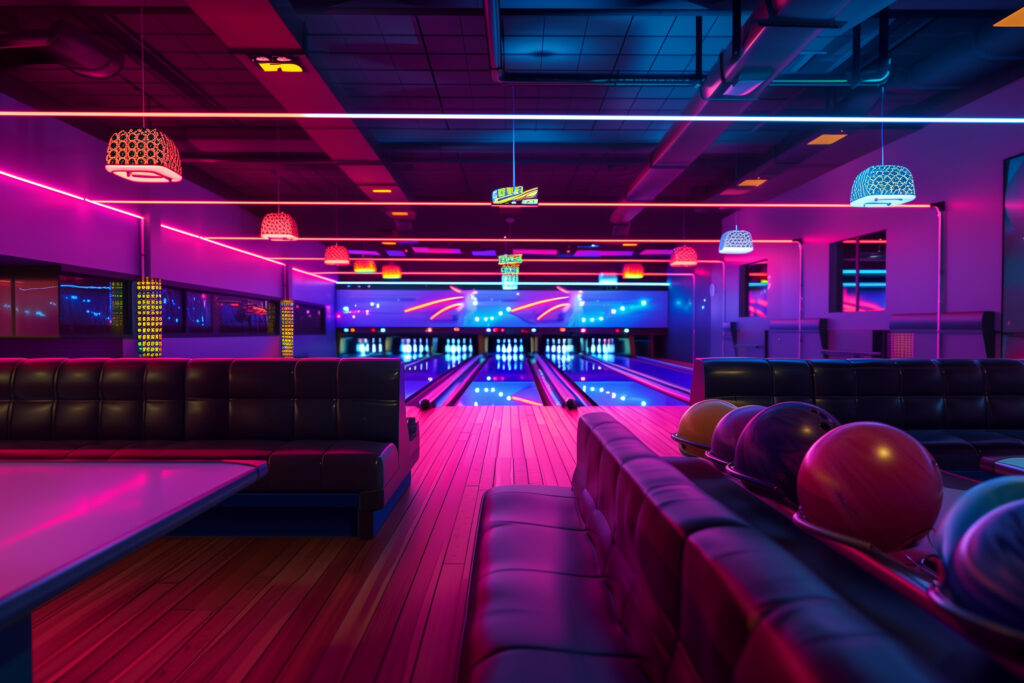
What’s growing is the opposite format: boutique and themed bowling venues are up roughly 25% since 2018 — 8–16 lanes, real food, cocktails, blacklight events, arcades. In other words, bowling didn’t die; it became a family entertainment concept with lanes as the anchor. That’s the business you’d actually be opening in 2026 — and it changes every decision, from square footage to software.
Franchise vs. Independent vs. Turnkey: Which Path Fits You?
| Factor | Franchise (810) | Turnkey (Brunswick / QubicaAMF) | Independent |
|---|---|---|---|
| Upfront cost | $1.5M–$3.5M+ $50K fee | Comparable buildoutNo fee | Widest rangeSmallest formats cheapest |
| Ongoing fees | ~5% royalty+ marketing fund, forever | None | None |
| Playbook & support | Full system: training, menu, design, operations | Design, equipment, and launch consulting | You build it |
| Brand pull | Growing but small systemLimited national recognition | Your own brand | Your own brand |
| Flexibility | Brand standards apply | Full control | Full control |
| Best for | First-timers with capital who want rails | The pragmatic middle: support without royalties | Operators with hospitality chops |
The lower-cost entry: boutique, duckpin, and mini bowling
If seven figures isn’t your starting point, look at the small-format wave: duckpin and mini-bowling lanes are shorter, need no full-size pinsetters, and slot into existing FECs, breweries, and retail spaces at a fraction of ten-pin costs. It’s the fastest-growing corner of the industry precisely because it keeps the social magic and drops the real-estate burden.
How to Open Your Own Bowling Alley in 7 Steps
- Validate the market. Boutique bowling needs dense 21–45 demographics and weekend family traffic; check what’s within 20 minutes and what died there before (and why).
- Pick your path. Franchise, turnkey, or independent (table above) — this decides your budget, timeline, and lease requirements.
- Secure the space. 12,000–40,000 sq ft depending on format, with the ceiling height and column spacing lanes demand. Retail landlords increasingly court entertainment anchors — negotiate tenant improvement allowances.
- Arrange financing. SBA loans are common in this category (810 is SBA-approved); equipment financing covers a chunk of lane packages. Write the plan first — our venue business plan guide maps section-by-section to bowling.
- Buy the equipment. Lanes, pinsetters, scoring, furniture — from Brunswick, QubicaAMF, or certified used packages. Get the kitchen designed by someone who’s run venue F&B, not just restaurants.
- Hire for hospitality. The modern center is a restaurant-and-events business with lanes; staff and train accordingly.
- Launch with the tech stack live. Online lane booking with time slots and dynamic pricing, party packages bookable with deposits, POS wired to the kitchen, and a CRM capturing every guest from day one — retrofitting this later costs you your launch momentum.
Modern Bowling Is a Family Entertainment Center (Run It Like One)
The revenue mix: lanes + F&B + arcade + parties
Every number in this article points the same direction: the winning bowling business of 2026 is a multi-revenue FEC where lanes anchor the visit and the margin lives around them. Reserved lanes by the hour, a kitchen that earns 35–45% of revenue, an arcade that monetizes the wait, and party rooms that book weekends solid. Run that mix well and you’re insulated from everything that killed the league-era alley — we’ve written about selling more without adding staff if you want the operational side of that argument.
How BMI Leisure runs bowling and FEC operations
This is precisely the venue type BMI Leisure has served for 25+ years. Lane reservations are session bookings — our booking & scheduling engine handles time slots, dynamic pricing by daypart, and online booking so groups reserve and prepay without a phone call. The POS and F&B module run the kitchen and bar on the same guest tab as the lane; party & events packages the birthday machine; and the CRM turns one-off Saturday groups into leagues, memberships, and repeat corporate events. One system, every revenue stream, one guest profile.
Built for the Modern Bowling Center
Lane booking, dynamic pricing, POS, F&B, parties, and CRM in one platform — so every lane hour, plate, and party earns what it should.
Get in Touch with Our TeamFrequently Asked Questions
Can you franchise a bowling alley?
Yes, but true franchises are rare. 810 Billiards & Bowling is the most prominent option (~$1.5M–$3.5M total investment). Bowlero/Lucky Strike, AMF, and Main Event are corporate-owned and don’t franchise. Alternatives: turnkey programs from Brunswick or QubicaAMF, or going independent.
Is owning a bowling alley profitable?
Modern centers can be very profitable — but not on lane fees alone. F&B contributes 35–45% of revenue in today’s successful venues, with arcade, parties, and corporate events adding more. Profit lives in revenue per lane per hour and the events calendar, not in league bowling.
Why are so many bowling alleys closing?
The league-dependent model died: leagues once drove ~70% of a center’s business and now produce closer to 40% and falling. U.S. centers fell from ~12,000 in the 1960s to roughly 2,500–3,200 today. Meanwhile, boutique and FEC-style bowling — fewer lanes, strong F&B, events — has grown about 25% since 2018.
How do I open my own bowling alley?
Validate the market, choose franchise/turnkey/independent, secure a large-format space, arrange financing (SBA is common), buy lanes and pinsetters from Brunswick or QubicaAMF, hire for hospitality, and launch with online lane booking, party packages, and a real F&B program from day one.
How much does it cost to open a bowling alley without a franchise?
It varies with format: boutique 8–12 lane concepts can come in well below the $1.5M–$3.5M franchise range, while full-size 30+ lane centers exceed it. New lane packages run tens of thousands per lane — lane count is your biggest cost lever.
Sources
- SharpSheets — 810 Billiards & Bowling Franchise FDD, Profits & Costs (investment range, fees, system size). sharpsheets.io
- Franchise Gator — 810 Billiards & Bowling Franchise Cost, Fees (2026) (liquid capital, net worth requirements). franchisegator.com
- IBISWorld — Bowling Centers in the US (center counts and annual decline rate). ibisworld.com
- Randal S. Olson (U.S. Census Bureau data) — The Rise and Fall of Bowling in the United States (historical center counts). randalolson.com
- White Hutchinson Leisure & Learning Group — What’s Happening to Bowling? (league share decline, boutique growth, F&B revenue share). whitehutchinson.com
Franchise fees and investment ranges change and vary by territory — always request the brand’s current Franchise Disclosure Document (FDD) and consult a franchise attorney before investing. Industry statistics are from the sources above as of July 2026. This article is general guidance, not financial or legal advice. Last updated: July 13, 2026.