
The smallest piece of hardware in your venue carries the whole visit: the band on a guest’s wrist is their entry ticket, their session timer, their wallet and their identity — all at once, if the system behind it is real. Search for an RFID wristband and you’ll mostly find people selling the bands themselves, by the thousand, for festivals. This guide is about the other 95% of the decision: the rfid wristband system — readers, software and guest data — that turns a $1 band into the way your venue actually runs.
What Is an RFID Wristband System? (Quick Answer)
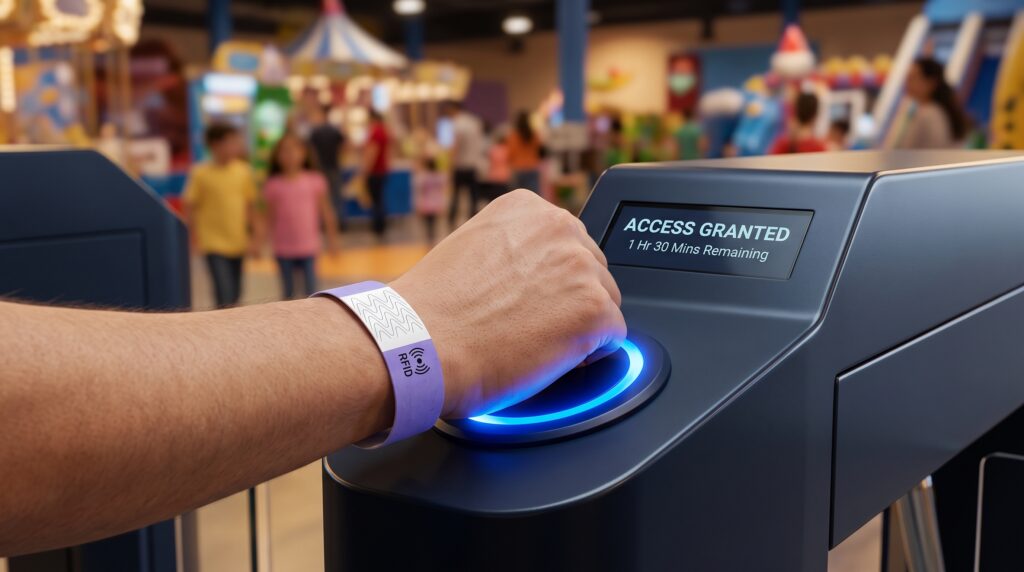
An RFID wristband system is more than the bands: it’s the wristbands, the readers at entrances and tills, and — the part that matters most — the software that ties each band to a guest, their session rights, their cashless balance and their waiver. The band is a wearable key; the system is what the key opens, spends and proves.
The Wristband Itself (The Easy Part)
The physical layer is mature, well-documented and honestly not where your decision lives. The chips are almost always passive — no battery, powered by the reader’s signal at short range, per supplier ID&C’s technical guide. Material decides the use case: silicone and elastic bands are reusable (season passes, memberships, staff), while vinyl and locking fabric bands are single-use by design so they can’t be passed between guests. Published pricing starts around $0.53 for paper RFID bands, with most supplier catalogs quoting by volume and material.
For the bands themselves, specialist suppliers are the right place to buy — that market is competitive and transparent. What their catalogs can’t sell you is everything after the tap. That’s this guide.
The Four Jobs of a Wristband in an Entertainment Venue
- Access credential. The band carries which activities and which time windows the guest paid for, and gates or handheld readers enforce it per zone — the mechanics of activity access control, where capacity limits stop being paper policies.
- Cashless wallet. Credits for the arcade, the café and the vending wall live on the band — loaded at the desk or a kiosk, spent with a tap. If a dedicated card system runs your game floor, the band is its wearable form factor: we compared the four major cashless card systems separately, and most offer wristband media.
- Session control. The 60-minute jump session actually ends at minute 60 — readers know when each band’s time expires, so enforcement stops depending on a staff member’s memory and a wall clock.
- Guest identity. The band links to the profile: waiver signed, party group, visit history. The tap at the gate is also the check-in, and everything the guest does becomes data the venue keeps — which is where wristbands quietly become marketing.
Wristband Manager: What the Software Side Must Do
This is the layer band catalogs never explain — the wristband management system your staff actually operate every day. Six functions separate a real one from bands with nowhere to live:
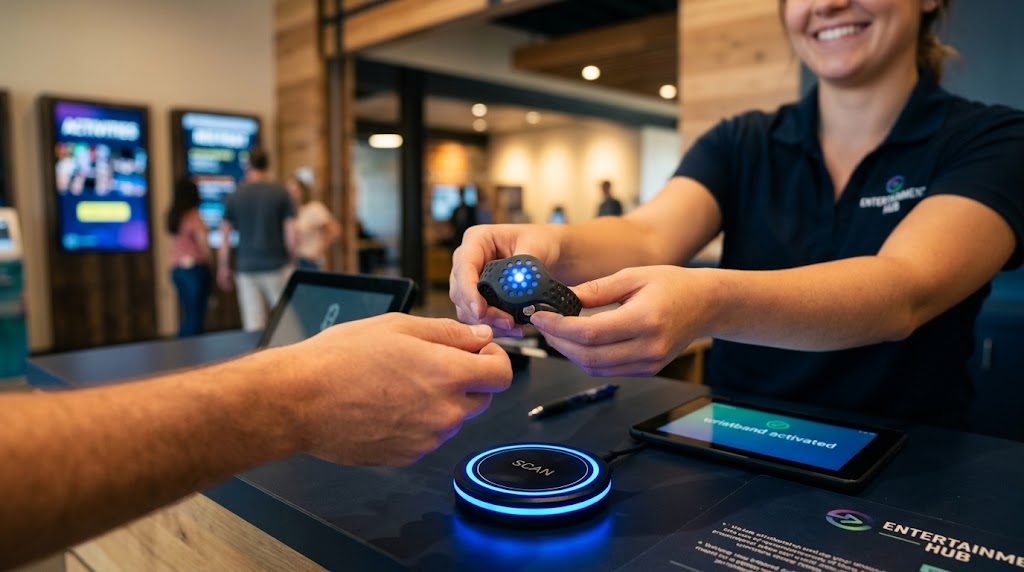
- Issue and encode at speed. Bands are linked to guests at check-in or a self-service kiosk in seconds — during the Saturday rush, not despite it.
- Load, reload and refund the wallet — at the desk, at kiosks, ideally online before arrival, with bonus-credit tiers doing the upselling automatically.
- Tie the band to booking and waiver. The reservation made last week and the waiver signed at home arrive on the wrist at check-in — no re-registration.
- Expire rights on schedule. Session windows, day passes and memberships end themselves; gates simply stop opening.
- Handle the lost band gracefully. The operator question that reveals everything: block the lost band, issue a replacement, balance and rights intact — because the guest’s value lives in the software, not the silicone. If losing a band means losing money, you bought bands without a system.
- Report. Spend per band, top-up patterns, session utilization — the numbers that connect the wristband program to revenue, in the same reporting as everything else.
Wristbands vs Cards: When Each Wins
Same system, two form factors — and the venue decides. Wristbands win wherever hands are busy, wet or small: trampoline parks, water attractions, kids’ venues, anywhere pockets are a liability mid-activity. Cards win where guests keep wallets: arcade-first venues and adult sessions, at a lower per-unit cost. Many venues run both on one system — bands for the jump floor, cards for the arcade — which is exactly why the software layer, not the media, should be the purchase decision.
What a Wristband System Costs
Three layers, budgeted separately:
- The bands — the cheap layer: from roughly $0.53 per unit (published paper-RFID pricing) upward by material and volume; reusable silicone costs more per band but amortizes across visits. Budget for loss and replacement stock.
- Readers and encoders — the real hardware line: entrance gates or handhelds per activity zone, encoding at check-in desks and kiosks, tap points at tills. Count zones, not just doors.
- The software — if wristbands are a module of your venue platform, this lives in the platform contract; if you’re bolting a standalone band system onto separate booking and POS, price the integrations and expect them to be where the project gets hard.
Rollout: 6 Checks Before Launch
- Run the wet test. Bands, readers and taps working on the splash pad and after the hundredth jump — before launch weekend, not during.
- Demo the lost-band flow. Block, reissue, balance intact, under one minute — make the vendor perform it live.
- Check reuse economics. Reusable bands need collection at exit and hygiene handling; single-use bands need volume pricing. Model a month of each.
- Verify the check-in link. Booking + waiver land on the band automatically — if staff type anything twice, the system isn’t integrated.
- Place top-up points where credits die. Kiosks at the arcade floor and the café line, not just the entrance.
- Decide the data plan. Spend and session data flowing into guest profiles is half the ROI — confirm where it lands and who can act on it.
The System Behind the Band
Colored session bands or full RFID — access, payments, session timing and guest identity on one platform, from check-in to check-out. See how wristbands run at 300+ venues.
Explore WristbandsFrequently Asked Questions
What is an RFID wristband system?
More than the bands: it’s the wristbands, the readers at entrances and tills, and — the part that matters most — the software that ties each band to a guest, their session rights, their cashless balance and their waiver. The band is a wearable key; the system is what the key opens, spends and proves.
Are RFID wristbands reusable?
Depends on the material. Per supplier ID&C, silicone and elastic RFID wristbands are easily reusable — suited to season passes, memberships and staff credentials — while vinyl and locking fabric bands are designed for single use so they can’t be transferred between guests. Venues running daily sessions typically use reusable silicone collected at exit, or cheap single-use bands issued per visit.
What happens if a guest loses their wristband?
In a proper wristband system, the band is just a key — the guest’s balance, session rights and identity live in the software. Staff block the lost band, issue a new one linked to the same guest profile, and the balance carries over intact. If losing a band means losing money, the venue bought bands without a system.
How much do RFID wristbands cost?
The bands are the cheap layer: published supplier examples start around $0.53 per paper RFID band, with silicone and fabric options quoted by volume and material. The real budget lines are readers and encoders at entrances, kiosks and tills, plus the software — which, if wristbands are a module of your venue platform, lives inside that contract rather than as a separate purchase.
Sources
- ID&C — How Do RFID Wristbands Work? (passive vs active tags, frequencies, data capacity). idcband.com — verified August 13, 2026.
- ID&C — Custom RFID Wristbands (silicone/elastic reusable vs vinyl/fabric single-use; paper RFID published at $0.53; materials range). idcband.com/wristbands — verified August 13, 2026.
- Wristbands.com — RFID Solutions (supplier-side view: credential calibration, spend dashboards for waterparks, resorts and festivals). wristbands.com — verified August 13, 2026.
- BMI Leisure — Wristbands feature page (colored session wristbands and RFID-enabled bands for access and payments). bmileisure.com — verified August 13, 2026.
Supplier information and pricing reflect each company’s own published pages as of August 13, 2026 and may change — band pricing in particular varies by volume, material and encoding; request current quotes. BMI Leisure is the publisher of this guide and offers wristbands as a module of its venue platform, disclosed above; specialist band suppliers are the right source for the physical bands themselves. Last updated: August 14, 2026.